Flat Roof Replacement Just Blocks From the Beach in Manhattan Beach
Flat roofs near the coast take a beating. Salt air, UV exposure, and marine layer moisture create a cycle that wears through aging roofing systems faster than most homeowners expect. When it goes unaddressed, you end up with ponding water, membrane failure, and leaks that are expensive to chase down.
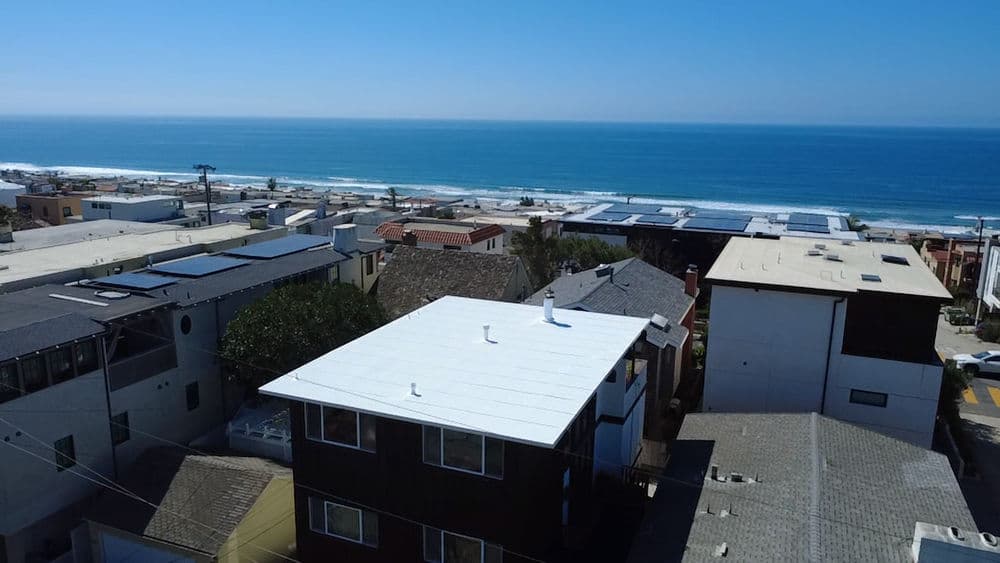
This was a full flat roof replacement on a multi-story property in Manhattan Beach. The old system was at the end of its life, and the goal was a clean, watertight installation that could actually hold up to the coastal environment long-term.
We installed a white TPO membrane roof, a solid choice for this type of property. TPO is heat-welded at the seams, which means there are no gaps or overlaps for water to find. It also reflects UV rays instead of absorbing them, which matters a lot when you're less than a block from the Pacific. The finished surface is bright, even, and built to last.
What makes flat roofing tricky in neighborhoods like this is that every penetration, every pipe, every vent, every mechanical curb is a potential leak point if it's not detailed correctly. We take our time on those transitions. It's not the part that shows up in a drone shot, but it's the part that determines whether the roof holds up in year two, five, and ten.
Manhattan Beach properties carry real value, and the roofing system protecting them should be treated accordingly. A properly installed flat roof done right the first time saves a lot of headaches down the road.